Library of Canterville Chase
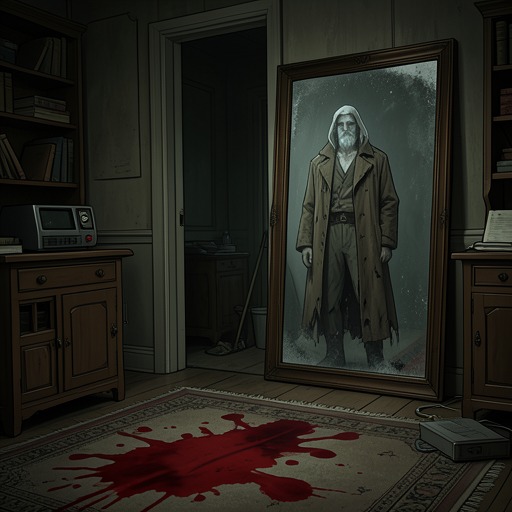
The Canterville GhostThe Library of Canterville Chase is both a working room in the household and the setting where the history of Canterville Chase repeatedly intrudes on the present. Its bloodstain marks the murder of Lady Eleanore de Canterville; its window bears the prophecy that anticipates the house’s eventual peace; and a concealed opening leads from it to the chamber where Sir Simon de Canterville’s remains are found. The room therefore joins domestic routine, family memory, and the secret that resolves the haunting.
Setting and First Appearance
The library is a long, low room panelled in black oak, with a large stained-glass window at one end. The Otis family enters it after arriving at Canterville Chase, passing through the Tudor hall to find tea laid out. The room is introduced as a place of ordinary hospitality, but that domestic welcome is soon unsettled by the stain on the floor beside the fireplace.
The Bloodstain and the Family Past
Mrs. Otis notices a dull red mark and assumes something has been spilled. Mrs. Umney identifies it as the blood of Lady Eleanore de Canterville, murdered there by her husband, Sir Simon de Canterville, in 1575. She explains that Sir Simon survived his wife by nine years, then disappeared; his body had never been found, and his spirit was said to haunt the estate. The stain had become an object of interest to visitors, so the house’s history was at once a family crime and a public curiosity.
The Otises respond not with reverence but with household practicality. Washington Otis applies Pinkerton’s Champion Stain Remover and Paragon Detergent, and the mark disappears. The attempt to make the room clean and usable temporarily removes the visible trace of the murder, but it does not settle the past: the stain is associated with a haunting that continues, and the concealed history of Sir Simon remains undisclosed.
The Window and the Prophecy
The library window also carries the old prophecy, painted in difficult-to-read black letters. Virginia knows its six lines, which foretell that prayer from a golden girl, the almond’s flowering, and a child’s tears will bring stillness to the house and peace to Canterville. The prophecy gives the room a second function: beyond preserving evidence of past violence, it frames the possibility of release from the unrest attached to that history.
The Hidden Chamber and Resolution
Later, Virginia leads her family through an opening in the library’s wainscoting and down a narrow secret corridor. The route ends at a heavy oak door and a small, low chamber, where Sir Simon’s skeleton is chained to an iron ring in the wall. The discovery explains what the library’s bloodstain and the haunting had left unresolved: Sir Simon’s body had not simply vanished. By connecting the visible mark in the library to the concealed remains beyond its walls, the room becomes the threshold through which the family encounters the truth of the old crime and the tragedy behind the ghost’s unrest.